Buildable land in Quebec: what to check before you buy
A beautiful wooded lot by a lake can hide a trap: the impossibility of building on it. Too many buyers sign an offer on impulse, then discover that the soil will not take a septic system or that zoning forbids their project. Knowing how to recognize genuinely buildable land in Quebec avoids that kind of expensive disappointment.
This guide reviews the essential checks before buying: zoning, soil quality, environmental constraints, easements and the costs that come on top of the asking price. Each one can make or break a cottage project.
What buildable land means in Quebec
Buildable land is a lot where both the regulations and the physical conditions allow a building to be erected. A mention in a listing is not enough: it has to be confirmed by documents and tests. A lot can look perfect and still be unfit for construction for reasons of soil, zoning or access.
The good news is that every risk can be verified. Proceeding methodically makes it possible to buy with full knowledge and avoid surprises after signing.
The starting point is always the same: understand what the municipality allows on the lot in question.
Check the zoning before anything else
Zoning is one of the first things to verify when it comes to buildable land in Quebec.
Municipal zoning
The municipality's planning by-law determines the permitted use of a lot: residential, commercial, agricultural or resort. It also sets precise standards such as setbacks, maximum height and building siting. A poorly zoned lot can rule out the type of construction you have in mind.
Consulting the planning department before buying clarifies these rules. That step also reveals whether a building permit will be granted without particular constraints.
Agricultural zoning and the green zone
Some lots fall within an agricultural zone protected by the Commission de protection du territoire agricole du Québec. In this green zone, restrictions are severe and can block any residential construction in the absence of acquired rights. Verifying that status avoids buying unbuildable land.
Validate the soil's capacity to take a building
No buildable land in Quebec can do without a soil assessment.
The percolation test and the septic system
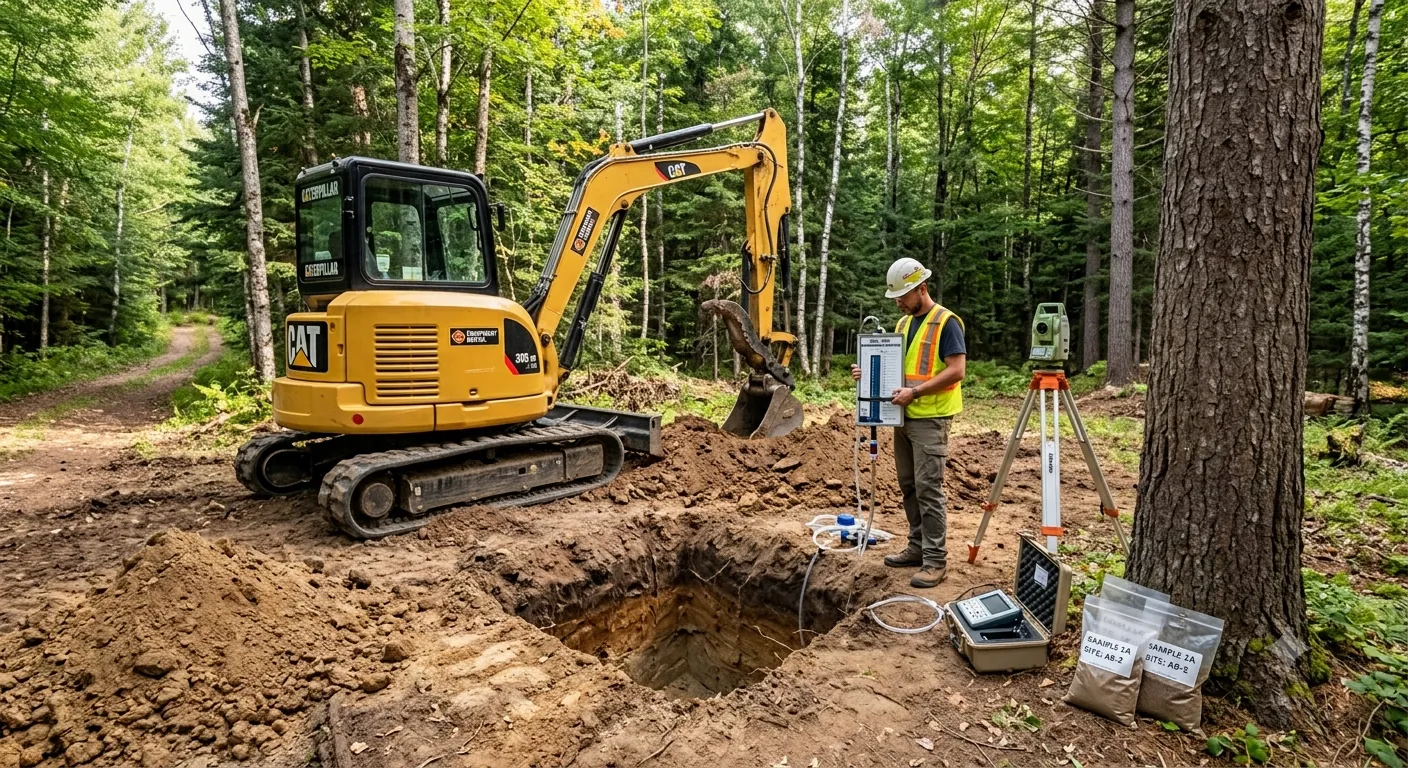
Outside areas served by water mains and sewers, a cottage depends on a well and a septic system. The percolation test, also called a soil test, assesses the permeability of the ground and determines whether it can take a wastewater treatment system. That analysis follows the Regulation respecting waste water disposal systems for isolated dwellings.
Soil that is too clay-heavy, rocky or poorly drained complicates the installation and drives up the bill. Without adequate treatment capacity, a lot is simply not buildable.
Environmental constraints and easements
Near water, buildable land in Quebec follows strict rules. The shoreline, known as the riparian buffer strip, must remain protected over a width of 10 to 15 metres depending on the slope, as the portal on riparian buffer regulations in Quebec explains. Construction there is generally prohibited, which reduces the area actually available to build on.
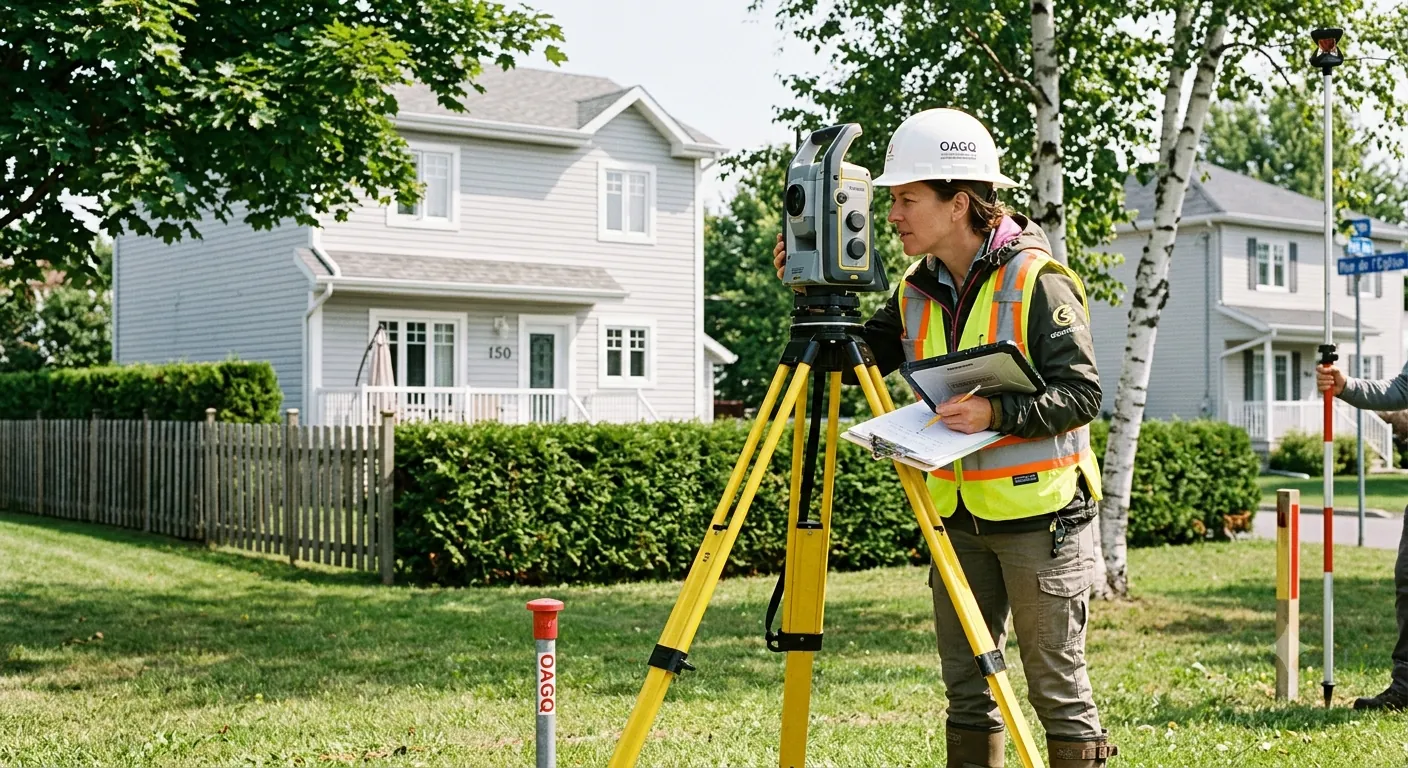
Wetlands and flood zones also limit a lot's potential. The location certificate, prepared by a land surveyor, flags these constraints as well as easements — a right of way or a public utility easement, for instance. A misunderstood easement can prevent you from building where you intended.
Having a notary review these documents before signing protects the buyer. A clause in the purchase offer making the sale conditional on these checks provides a way out if a problem emerges.
To validate each of these points against your own project, guidance from choosing the lot through to construction marks out every step.
The costs to plan for beyond the price of the land
The asking price is only part of the equation. On an unserviced lot, several expenses arrive before you even pour the foundation.
- Drilling an artesian well
- The septic system
- Clearing and preparing the site
- Connections to municipal services, where they are available
- Surveying, soil testing and permit fees
These amounts, detailed among others by La Presse in its feature on buying land, can add up to several tens of thousands of dollars. A lot already serviced within a planned resort community removes part of that uncertainty, since several of the checks have already been carried out.
Think about access and the lot's real usable area
Buildability is not only about soil and zoning. Access weighs just as heavily. A road passable year-round, maintained and cleared of snow, determines how a cottage can be used, especially in mountainous terrain. A private road often means a snow-removal cost-sharing agreement among neighbours.
Service availability matters too. Electricity at the edge of the lot avoids steep connection fees, while an area poorly served by telecommunications complicates seasonal rental, where a reliable connection has become essential.
Finally, the lot's real usable area deserves thought. Total surface does not always match buildable surface: the shoreline, the slope, wetlands and setbacks all reduce the space available. A large but heavily constrained lot can offer fewer possibilities than a more modest, well-oriented one.
Orientation and sun exposure influence both comfort and perceived value. A south-facing lot enjoys generous light and faster natural snow melt. Walking the land, at different times of day if possible, reveals details no document will show you.
Checklist before buying
Before committing, validate every item in the table below. It sums up the points that determine whether a lot deserves your offer.
| Check | Why it matters | How to validate it |
|---|---|---|
| Zoning | Confirms the intended construction is permitted | Municipal planning by-law |
| Percolation test | Establishes whether a septic system is possible | Soil study by a professional |
| Bearing capacity | Determines the type of foundation required | Penetrometer soil test |
| Services or well | Clarifies self-sufficiency or connection costs | Municipality and well driller |
| Shoreline and wetlands | Limits the genuinely buildable area | Location certificate |
| Easements | Can restrict how the land is used | Location certificate and notary |
Buying buildable land in Quebec with confidence
Buildable land in Quebec is recognized by verifiable facts, not by a good photograph. Zoning permits the project, the soil accepts a septic system and supports a foundation, shoreline constraints and easements are known, and the budget accounts for site development costs. Working through these steps one by one turns the purchase into an informed decision.
To explore lots already validated and ready to build on, visit a serviced community in the heart of nature and compare the prices on offer.
Your questions, our answers
How do you recognize buildable land in Quebec?
To recognize buildable land in Quebec, start by checking the zoning with the municipality to confirm the permitted use. Then carry out a percolation test and a bearing capacity test to validate the soil. Consult the location certificate to identify easements, the shoreline buffer and flood zones. A conditional clause in the purchase offer protects the buyer while these essential checks are carried out before signing.
How much do soil tests cost for a lot?
The price varies with the type of test, the size of the lot and the firm you choose. A percolation test and a bearing capacity study generally cost from a few hundred to a few thousand dollars. Those fees remain modest compared with the risk of buying unbuildable land. They come on top of site development costs such as the well and the septic system, which are often far higher.
Can you build near a lake in Quebec?
Yes, but strict rules apply. The riparian buffer strip, 10 to 15 metres wide depending on the slope, must remain protected, and construction there is generally prohibited. Wetlands and flood zones impose further limits. Before buying, confirm the genuinely buildable area with the municipality and through the location certificate for the lot in question.