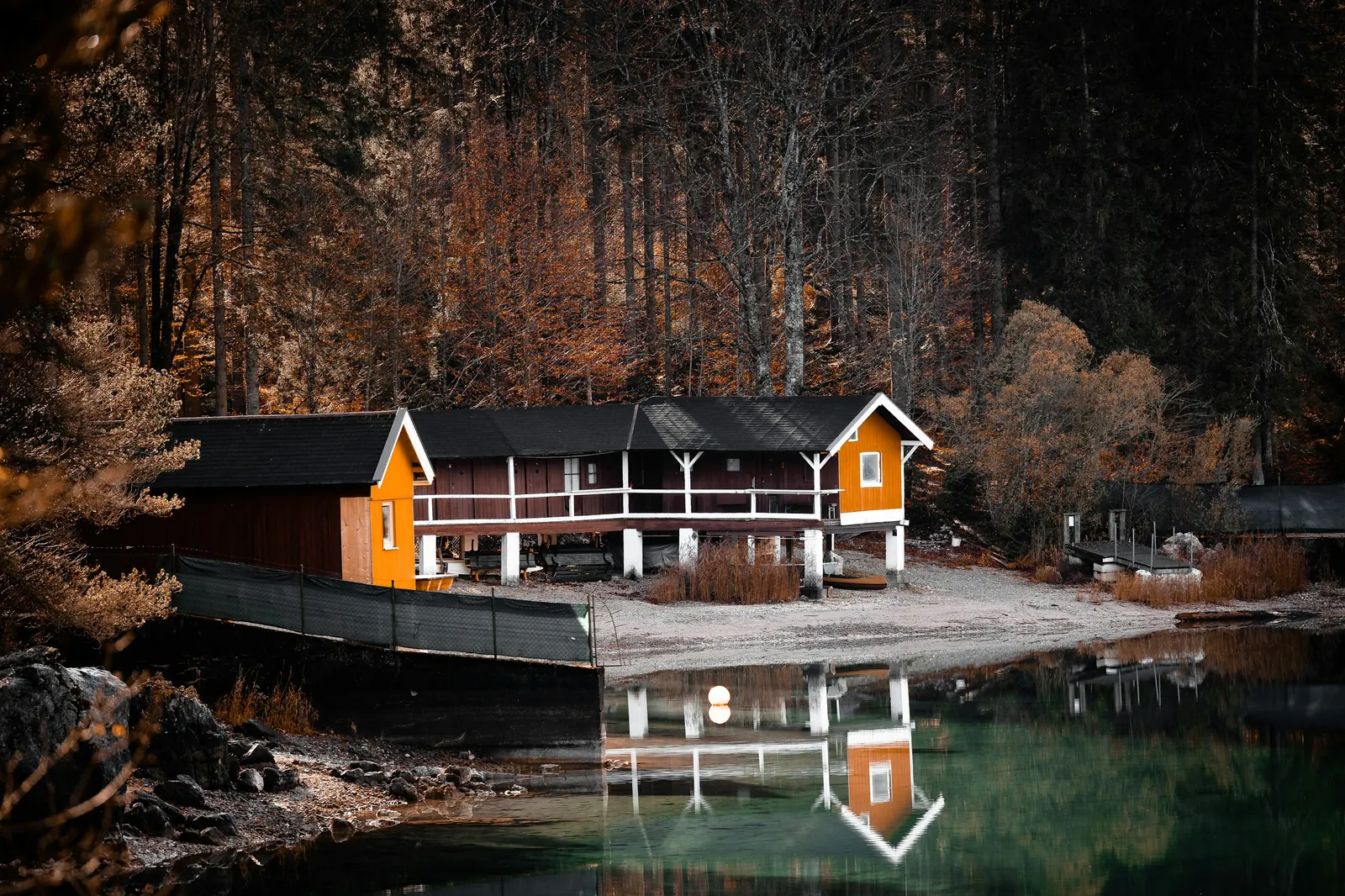
Buying a lakefront cottage: a lifestyle guide
Morning coffee on the dock, the stillness of the lake at dawn, evenings around the fire as the sun slips behind the mountain: if you are thinking of buying a lakefront cottage, that is often the picture guiding you. And as appealing as it is, the picture is incomplete.
Behind the scenery lie some very concrete questions. How much does a waterfront property cost in 2026? What rules govern the shoreline? Is the lake navigable, is access guaranteed, can you build on the lot? This guide answers these questions so your resort project rests on facts, not just on love at first sight.
Key takeaways
- The median price of a waterfront recreational property in Quebec reached $545,600 in 2025, with wide gaps from one regional county municipality (MRC) to another.
- The riparian buffer is protected by municipal regulations, which limits what you can build near the water.
- The type of lake, the access, the septic system and the zoning weigh as much as the view.
- A waterfront lot with a turnkey cottage can offer more control than an existing cottage that needs renovating.
Why buying a lakefront cottage changes your everyday life
A waterfront cottage is not just a second home. It is a way of life that sets the rhythm of weekends, holidays and, more and more, remote work.
A four-season lifestyle
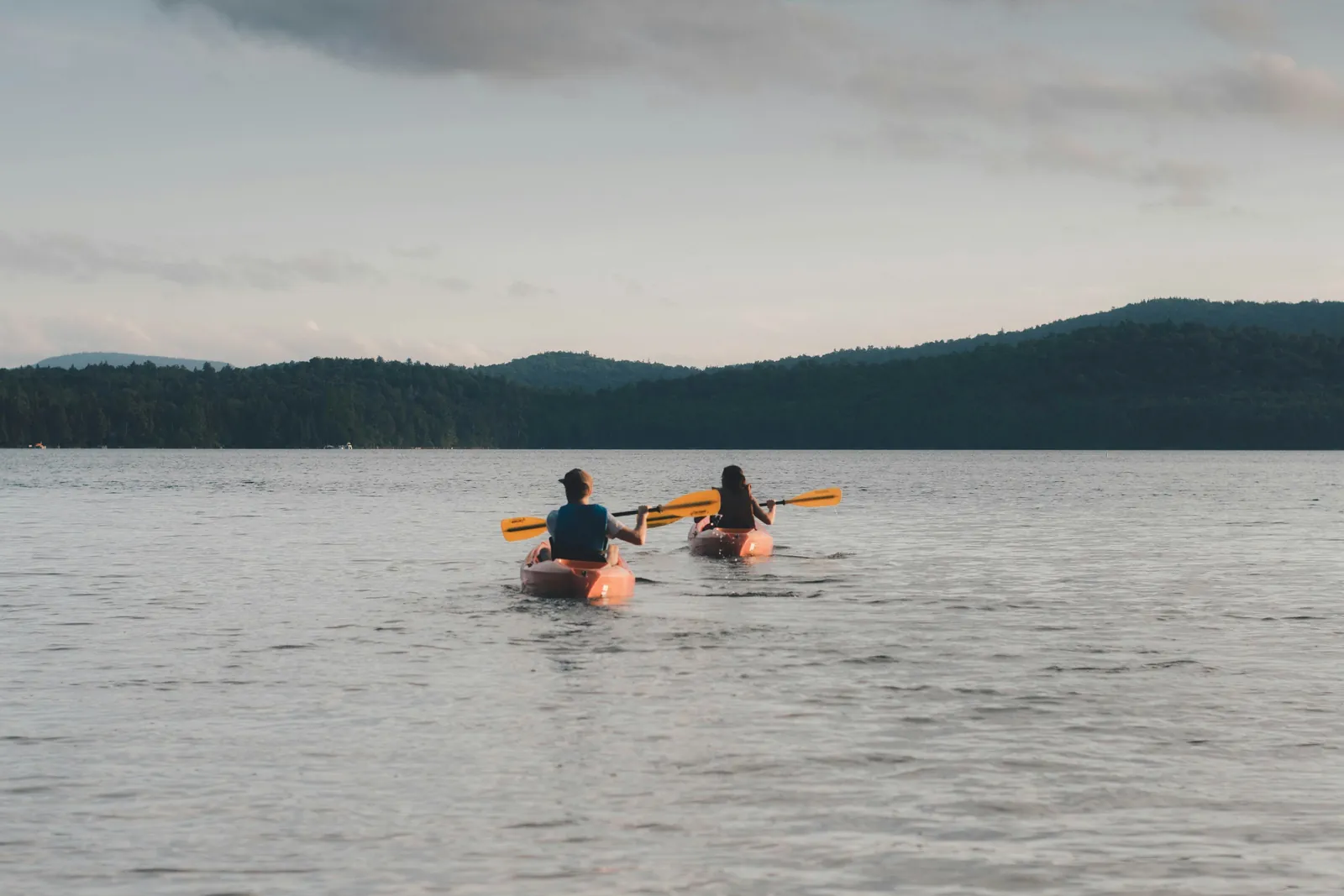
In summer, the lake becomes the centre of gravity: swimming, kayaking, paddleboarding and fishing. Autumn brings colour and calm. In winter, the ice opens the door to snowshoeing, skating and ice fishing, and ski resorts are often just minutes away.
That versatility explains why many buyers now look for a cottage they can live in year-round rather than a summer camp. Insulation, heating, snow clearing on the access road and internet access then become basic criteria.
Value supported by scarcity
Waterfront lots are limited by geography and by regulation. A lake has only so much shoreline, and the rules protecting aquatic environments limit the creation of new buildable lots near the water.
That scarcity explains why direct access to the lake remains one of the most sought-after criteria in resort living. It also explains why it pays to choose carefully, since a quality location is hard to replace.
The real budget for a waterfront cottage in Quebec
The purchase price varies with the region, the distance from Montreal and the quality of the lake. But it is only part of the investment. The table below summarizes the other costs to plan for.
| Cost to plan for | When | What to know |
|---|---|---|
| Land transfer duties (welcome tax) | At purchase | Payable to the municipality, calculated on the property's value |
| Pre-purchase inspection | Before the firm offer | Essential for the structure, roof and foundations |
| Water and septic system testing | Before the firm offer | Replacing a septic system can be expensive |
| Notary and certificate of location | At purchase | Confirms the lot boundaries and the distance from the shoreline |
| Municipal and school taxes | Every year | Vary widely from one municipality to another |
| Road maintenance and snow clearing | Every year | Often shared among neighbours on a private road |
| Septic tank pumping | Every 2 to 4 years | How often depends on use, seasonal or year-round |
These costs weigh more heavily on a tight budget, hence the value of comparing regions. Lanaudière, for example, draws buyers looking for a waterfront cottage with more space for their budget.
For a complete picture of recurring costs, see this guide to the budget to plan for a cottage in Quebec.
The criteria to confirm before making an offer
A beautiful view is not enough. Before signing a promise to purchase, several elements deserve rigorous checking.
- The type of lake: navigable or not, motorboats allowed or banned, surface area and depth.
- Access to the water: private frontage, shared notarized access or a simple right of way.
- Water and wastewater systems: well, septic tank and compliance with provincial standards.
- Zoning: permitted uses, whether short-term rental is allowed, expansion projects.
- Orientation: sunlight on the lot, sunsets, exposure to the prevailing winds.
- The access road: municipal or private, winter maintenance and associated costs.
The riparian buffer, a constraint to understand
In Quebec, a lake's shoreline is protected. Each municipality applies its own rules, often stricter than the provincial minimum. In Saint-Adolphe-d'Howard, for example, the municipal regulations on the riparian buffer set its width at 15 metres, and at 20 metres for a main building.
The same municipality requires the first 5 metres of shoreline to be renaturalized and bans mowing the lawn within the first 10 metres. Access to the water up to 5 metres wide can be authorized where the slope is under 30%.
In practice, these rules shape where the cottage sits, the size of the beach and the layout of the dock. Better to know them before you set your heart on a particular setup by the water.
Short-term rentals
Many buyers count on rental income to ease their costs. However, every municipality regulates this kind of use. According to Revenu Québec, the operator of a tourist accommodation establishment must register it and display its registration number in all of its listings. This guide to buying a cottage to earn rental income details the steps to follow.
Want to compare waterfront lots against your budget and how you plan to use them? Browse the resort communities on offer to find the areas that match your criteria.
Waterfront lot or existing cottage: which option to choose
Two main paths are open to you. The first is to buy a cottage that is already built. It lets you enjoy it quickly, but it often involves compromises, whether dated insulation, a septic system to replace or an interior layout to rethink.
The second is to acquire a lot and have a new cottage built on it. This choice takes more patience, since a custom project generally spans 12 to 18 months. In return, you get your ideal building, compliant with current standards and suited to the way you live.
The turnkey option
Between these two extremes, the turnkey cottage on a selected lot is gaining in popularity. The developer oversees the choice of model, the architectural charter and the coordination with contractors, which reduces surprises.
A waterfront community in Saint-Adolphe-d'Howard, for example, offers lots around a navigable lake, about an hour from Montreal and some ten minutes from Mont Avalanche.
Before buying a lot, several checks are needed, from zoning to soil capacity. This checklist of what to verify before buying a building lot will help you avoid unpleasant surprises.
Laurentians or Lanaudière: where to look for your waterfront cottage
The Laurentians offer a high density of lakes, lively villages and handy proximity to Montreal. Demand there is strong, especially in the areas closest to the city, such as the Pays-d'en-Haut.
Lanaudière draws buyers looking for more space and better value for money. Matawinie, with its many lakes and the Val Saint-Côme ski resort, combines nature, the outdoors and a market that is often more affordable.
The right choice depends on how you will use it. A family cottage used every weekend is best located less than 90 minutes from home. A more contemplative retreat can justify a longer drive in exchange for a quieter lake.
Buying a lakefront cottage with confidence
Buying a lakefront cottage means choosing a way of life as much as a real estate asset. Waterfront prices remain supported by limited supply, and shoreline regulations call for serious planning before any project.
By confirming the type of lake, the access, the zoning and the municipal constraints from the outset, you turn a crush into an informed decision. To discuss your project and explore the lots available, get in touch with an advisor.
Your questions, our answers
Is buying a lakefront cottage in Quebec a good idea?
Buying a lakefront cottage in Quebec can be a very sound decision if the project is well prepared. Waterfront supply remains limited, which supports prices over the long term. You should nonetheless budget for higher maintenance, insurance and tax costs, and check the zoning, access to the water and the riparian buffer rules before signing an offer.
Can you build near a lake in Quebec?
Yes, but at a good distance from the shoreline. Most municipalities impose a riparian buffer of 10 to 15 metres, sometimes more, where construction is prohibited. In Saint-Adolphe-d'Howard, a main building must be set back 20 metres. A municipal certificate is generally required for any work near the water. Always consult the planning department of the municipality concerned before buying or developing a waterfront lot.
What costs should you plan for with a waterfront cottage?
Beyond the purchase price, plan for land transfer duties, the pre-purchase inspection, well water testing, notary fees and a recent certificate of location. Each year adds municipal taxes, insurance, road maintenance and snow clearing. The septic tank must also be pumped regularly. A realistic budget accounts for all of these costs before you set the maximum price of your offer.